
What Happens When a Horse Knows You Better Than You Know Yourself
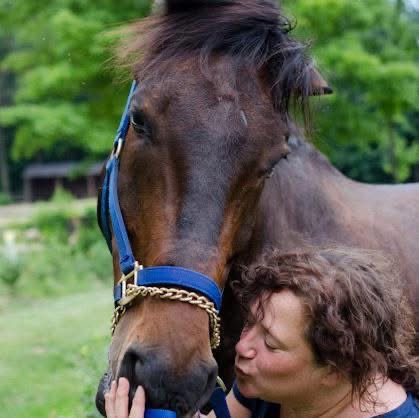
There is a moment Suzanne MacPhail describes that almost every person who has worked with a horse will recognize: you walk into the paddock carrying something heavy — grief, anxiety, a story you've told yourself so many times you've forgotten it isn't true — and the horse already knows. Before you've said a word. Before you've done anything at all.
"Horses can hear our heartbeats from four feet away," Suzanne explained during her recent appearance on Rise, Heal & Grow with Leah M. Hill. "When we get into their space, our heartbeats synchronize with the horse's heartbeat — and it can slow down."
That synchronization — calm, physiological, beyond language — is at the heart of what Suzanne has spent more than 30 years building toward. As a Licensed Mental Health Counselor (LMHC), EAGALA-certified equine-assisted learning practitioner, and founder of Hands for Healing Equine, she has created a nonprofit dedicated to making this remarkable form of growth experience accessible to those who need it most.
What Is Equine-Assisted Learning?
Equine-assisted learning uses horses and donkeys as partners in the growth process. It's not riding — clients never get in the saddle. The work happens entirely on the ground: grooming, leading, observing, and simply being present with an animal that reads body language the way most of us read words.
Horses are prey animals," Suzanne told host Leah M. Hill. "Their job is to stay safe. They're always figuring out what our intentions are." That hypervigilance makes them extraordinary mirrors. Walk into a paddock nervously, and the horse is on alert. Arrive calm and open, and something different happens — the equine meets you there.
For people carrying trauma, grief, anxiety, or ADHD, this kind of honest feedback — given without judgment, without an agenda — can unlock something that years of traditional talk methods sometimes cannot reach.
"I've had so many experiences where students have disclosed something for the first time," Suzanne said. "Things they quote-unquote thought they had dealt with."
Healing Begins Where Words End
Suzanne's journey with horses started at Camp Flirty in Fitzwilliam, New Hampshire, the summer after her parents' divorce. She was nine. She couldn't have articulated what she felt then — only that being near horses made something quiet inside her that had been loud.
Decades later, that instinct became a clinical practice. She earned her LMHC, became certified through EAGALA as both a licensed therapist and an equine specialist — a dual credential requiring 6,000+ hours of horse experience — and began bringing graduate students and clients to the barn.
What she observed was consistent: people who walked in afraid left transformed. Adults who thought they had "done the work" discovered there was more. Children with ADHD, who struggled to stay on a single task anywhere else, found themselves entirely focused on the horse in front of them.
"In a barn, you can't run around," she noted. "Horses can spook easily. And children want to do well by animals. It gives them that reminder to slow down."
Meet the Herd at Hands for Healing Equine
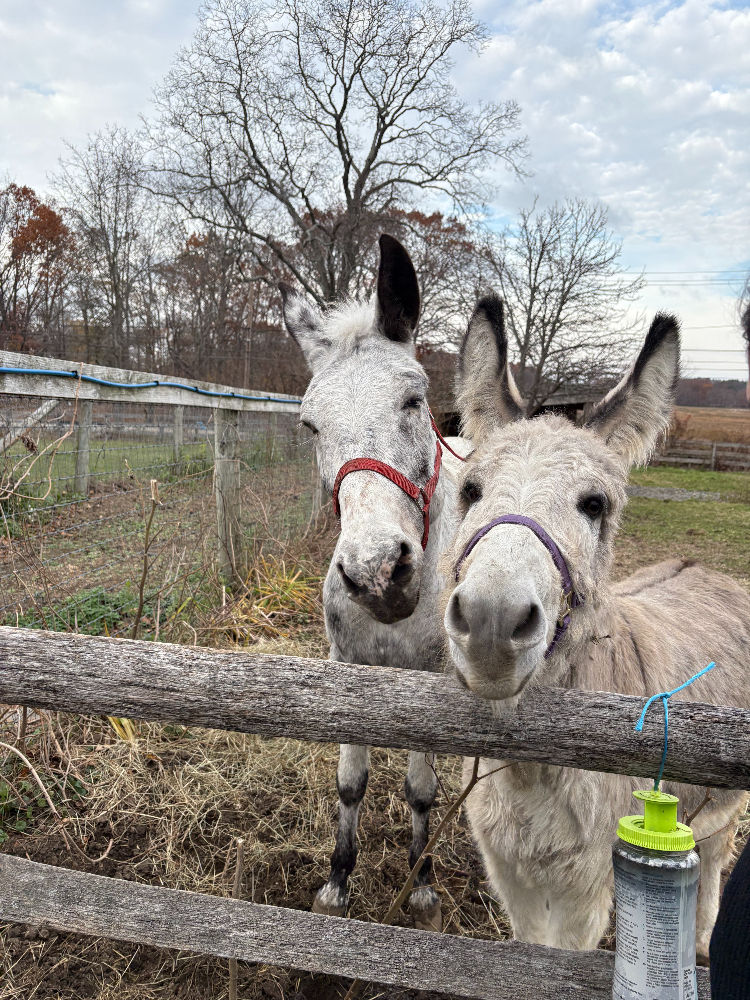
Suzanne's equine team is as distinctive as her approach. Momma, a retired standardbred cart racer, greets visitors with an immediate, attentive presence. Sophie, a retired Argentine polo pony, brings grace and decades of experience to the paddock. Autumn, a dappled gray hinny (half horse, half donkey), was pulled from a kill pen and spent two years earning trust before she could be approached. And Poe, a full-bred donkey, is especially beloved by children with ADHD.
With her nurturing spirit, Momma offers comfort and reassurance. She has a special way of helping pe A retired polo pony, Sophie is both athletic and deeply intuitive. She now helps others slow down, r Autumn helps others feel safe and supported. Poe brings lightness and authenticity.
Each animal has been carefully observed and matched to the work. Temperament, history, comfort with people — all of it matters. The herd is not a prop. They are, as Suzanne insists, the practitioners and partners in healing. The humans are the facilitators.
Who Hands for Healing Equine Serves
The nonprofit offers equine-assisted programs for veterans, mothers navigating grief and loss, and individuals working through anxiety, trauma, and life transitions. Suzanne is also committed to programming for young people — believing strongly that families heal together, not in isolation.
"90 to 95% of the time, the issues that happen to us come from within the family," she said. "I want parents to be able to heal themselves so they become more aware of how they're projecting things they don't evehn know they're doing."
The mission is access. Equine-assisted learning experiences have historically been available only to those who can afford them. Hands for Healing Equine is building a model that changes that.
Listen to the Full Conversation
Suzanne's full conversation with Leah M. Hill covers the science of heartbeat synchronization, how horses are selected and prepared for growth work, and the vision for what Hands for Healing Equine is becoming.
🎙️ Listen on YouTube: https://www.youtube.com/watch?v=TPZOylzSS-E


Comments