
The Quiet Healer: What Donkeys Bring to Equine-Assisted Learning That Horses Cannot
The Horse Gets All the Press
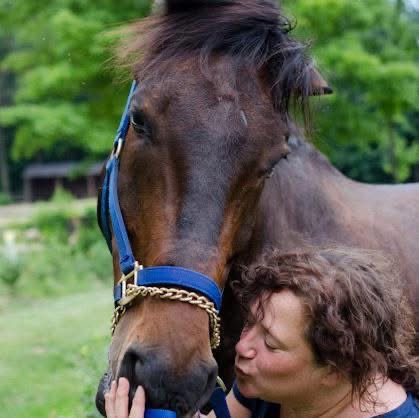
Equine-Assisted Learning research has focused almost entirely on horses. The horse's biofeedback capacity — its ability to respond to human heart rate, muscle tension, and breath in real time — is well documented. It is the foundation of most EAL protocols and the reason that "working with horses" has become shorthand for the entire field.
But there is something the research is increasingly making clear: donkeys are not just smaller, easier-to-manage versions of horses. They are a different kind of partner altogether.
Greater Empathic Sensitivity
A peer-reviewed study on the ethological and physiological parameters of donkeys in animal-assisted interventions found something that surprised many in the field: compared to horses, donkeys demonstrate greater empathic sensitivity in social contexts. The study noted that while horses offer documented benefits in psychomotor skill development, donkeys have the potential to improve socialization behaviors and mental health specifically through their empathic capacities.
"donkeys have the potential to improve socialization behaviors and mental health" — Normando et al. (2020), Animals (PMC peer-reviewed)
The practical implication is significant. Horses respond to what a person's body is broadcasting right now. Donkeys, it appears, attend to something longer and quieter — the accumulation of how someone moves through the world, not just how they walked into the barn this morning.
A Different Kind of Presence
There is a clinical reason why this matters. Many people who enter healing programs have learned to present themselves in ways that do not reflect what is actually happening inside. This is not deception. It is survival. It is what years of being told to hold it together, to move on, to be fine, does to a person.
Horses are very good at cutting through performance in the moment. Donkeys appear to reach something underneath the performance — the ambient emotional truth a person carries before they've decided how to package it.
"establish a circular relationship based on trust and the possibility of sharing emotions" — As cited in Fulgenzi et al. (2025), Frontiers in Psychiatry
Neither is better. They are different keys for different doors.
What the Research on Donkey-Assisted Services Shows
The field of donkey-assisted intervention is younger and smaller than the horse-assisted literature, but it is growing.
A 2025 systematic review published in Frontiers in Psychiatry examined donkey-assisted intervention across multiple populations and found consistent evidence for donkeys' effectiveness in reducing stress, fostering social connection, and supporting individuals with a range of mental health needs. The review described donkeys as "intelligent, independent, and friendly" partners.
Italy recognized this formally in 2015, becoming the first country to authorize donkey-assisted intervention in its national health guidelines. That is not a small gesture. It reflects an evidence base serious enough to move policy.
When Horses Are Not the Right First Door
For some participants — particularly those who are intimidated by the size or energy of horses — a donkey can be the entry point that makes everything else possible.
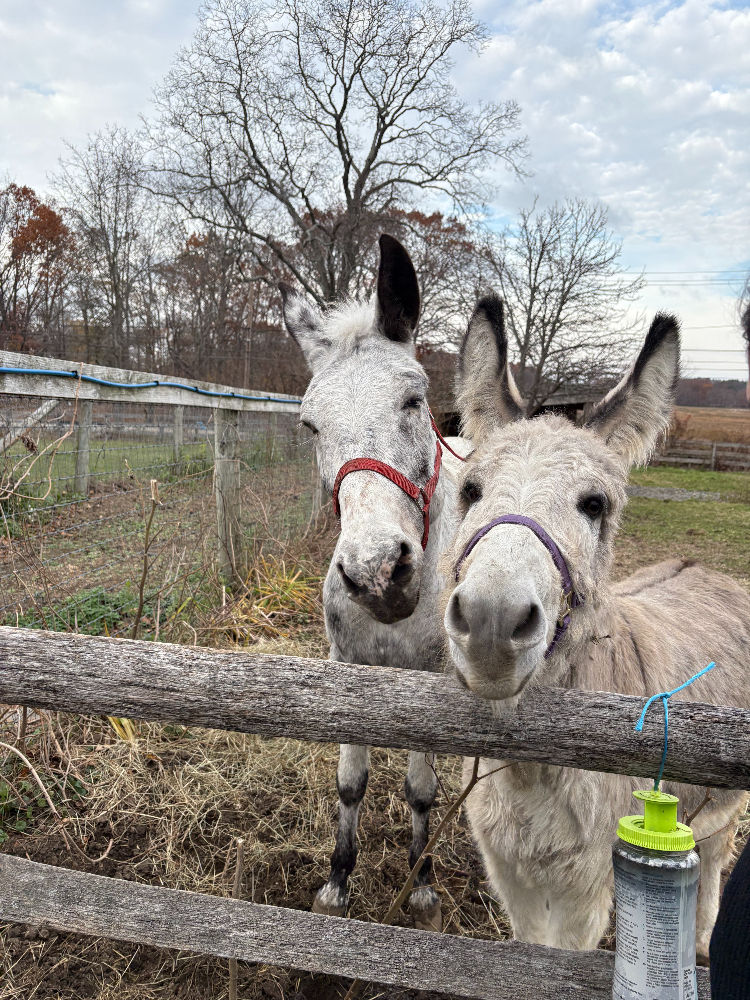
Poe is smaller, slower, and less reactive than our horses. He does not perform attentiveness. He either gives it or he doesn't. And for people who have spent a lifetime receiving performed attention from humans who were not actually present with them, the difference is immediately legible.
"cultivate a safe and engaging environment for therapeutic interaction" — Fulgenzi et al. (2025), Frontiers in Psychiatry
That is the thing about donkeys that no study has fully captured yet: sometimes, the most healing thing in the room is a being who does not pretend.
About Our Programs
Poe participates in both of our June 2026 programs — the Mother's Mourning Brush grief group for bereaved mothers and the Healing Herd program for women in recovery. Both are held at Hands for Healing Equine, 37 East Street, Topsfield, Massachusetts. No riding. No prior experience with donkeys or horses needed.
Sources
Normando, S., et al. (2020). Ethological and Physiological Parameters Assessment in Donkeys Used in Animal Assisted Interventions. PMC / Animals.
Donkey-Assisted Therapy in Mental Health Conditions: A Systematic Review. Frontiers in Psychiatry, 2025.
Navas González, F.J., et al. (2021). Donkey Behaviour and Cognition: A Literature Review. Applied Animal Behaviour Science.


Comments